
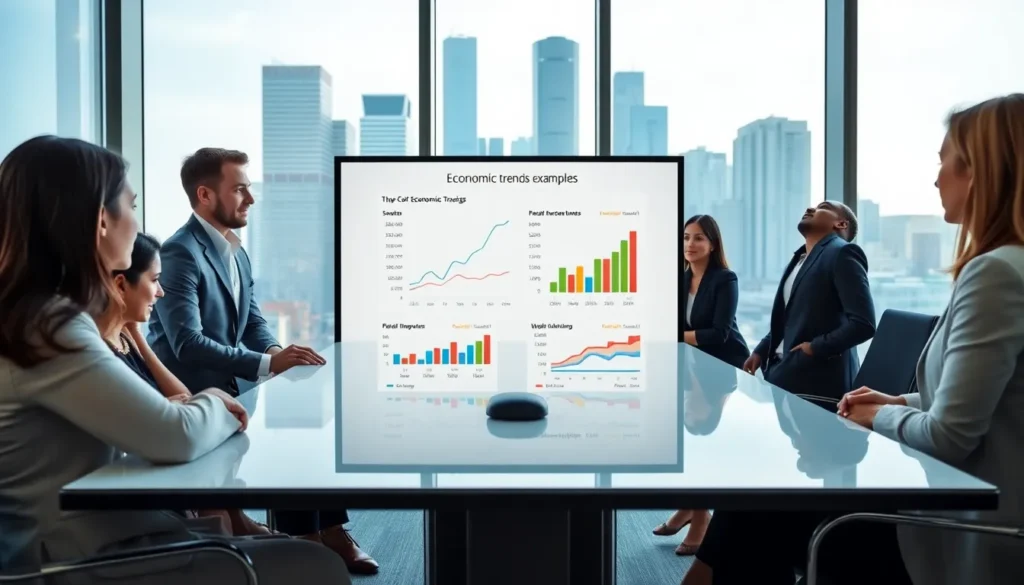
Economic trends may sound a bit academic, but they’re essential to navigating today’s world like a pro. Imagine walking into a store and finding that everything has suddenly become more expensive, don’t you wish you could predict that? Understanding economic trends can help individuals and businesses plan better, avoid pitfalls, and seize opportunities. In this text, we’ll jump into real-world examples of economic trends that can influence your daily life, from shopping habits to job markets and everything in between. Buckle up, because this journey through economics promises to be enlightening, and maybe even a bit fun.
Understanding Economic Trends

Economic trends represent the general direction in which an economy is moving. Think of them as the weather patterns for financial systems, sometimes sunny, sometimes stormy. These trends can range from short-term fluctuations to long-term shifts that reshape industries and even societies. Understanding these patterns is crucial for investors, businesses, and policymakers. They offer insights into consumer behavior, production levels, and overall economic health.
When discussing economic trends, it’s important to note that they can be influenced by a variety of factors, including consumer confidence, government policies, technological advancements, and global events like pandemics or financial crises. Recognizing these influences can help stakeholders make informed decisions.
Types of Economic Trends
Economists categorize economic trends into several types, each with its unique characteristics and implications for the market.
1. Cyclical Trends
These trends align with the business cycle, characterized by expansions and recessions. During an expansion, businesses thrive, and employment rates generally rise. Conversely, recessions lead to cutbacks in hiring and spending.
2. Secular Trends
Secular trends unfold over a long period, often spanning years or decades. For instance, the shift towards digital technologies represents a secular trend that has altered consumer and business behaviors extensively.
3. Seasonal Trends
Every economy experiences seasonality, which relates to fluctuations that occur at specific times of the year. Retail businesses often see spikes during the holiday shopping season, impacting sales and profits significantly.
4. Structural Trends
These trends stem from fundamental changes in an economy, such as demographic shifts. Aging populations in developed countries is a structural trend that affects labor markets and healthcare industries.
Current Economic Trends Examples
To provide context, here are some key examples of current economic trends that shape our world today:
1. Remote Work Transformation
The pandemic prompted a massive shift to remote work, which some experts believe is a permanent change. Companies are reorganizing their operations to accommodate flexible working models. This shift has implications for real estate, urban planning, and employee productivity.
2. Sustainability as a Driving Force
Environmental concerns are influencing market trends. Companies are increasingly adopting sustainable practices, influenced by consumer demand for greener products. This trend is reshaping not only how firms operate but also how they engage with customers.
3. Digital Payment Adoption
Online transactions have skyrocketed, with people opting for contactless and digital payment methods. This trend empowers e-commerce and poses challenges to traditional banking establishments.
4. Inflationary Pressures
Currently, inflation is a hot topic, with rising prices impacting consumers and businesses alike. Understanding the causes of inflation helps economists and businesses strategize to mitigate effects.
These examples demonstrate just how dynamic and influential economic trends can be in shaping daily life.
Impact of Economic Trends on Industries
Economic trends have wide-ranging impacts on various industries. For instance:
Retail Sector
The rise of e-commerce has forced brick-and-mortar stores to adapt or perish. Retailers are investing more in online platforms and improving logistics to stay competitive.
Automotive Industry
The growing insistence on sustainability has spurred innovations in electric vehicles. Companies are racing to develop more eco-friendly options as consumers show increasing interest in reducing their carbon footprints.
Technology Sector
Trends towards remote work drive demand for software solutions facilitating collaboration, communication, and cybersecurity. Tech companies that cater to these needs are thriving amid rising consumer expectations.
Healthcare Industry
Demographic shifts, particularly aging populations, create a surge in demand for healthcare services and innovations. Providers are compelled to enhance services to accommodate their changing consumer base.
Understanding these impacts allows businesses to pivot effectively and seize opportunities that arise alongside economic trends.
How to Analyze Economic Trends
To make sense of economic trends, one must engage in thorough analysis. Here are some steps to follow:
1. Gather Data
Collect relevant economic indicators, such as GDP, unemployment rates, and consumer spending patterns. Numerous government and industry reports can serve as valuable sources.
2. Identify Patterns
Look for recurring trends or shifts in the data. This could involve using historical data to compare past economic conditions with current circumstances.
3. Consider External Factors
Keep an eye on geopolitical events, policy changes, and industry developments. These external factors can significantly influence economic trends and outcomes.
4. Use Analytical Tools
Employ statistical tools and software to assist in data analysis. Visualizations, like charts and graphs, can help in understanding complex data sets more easily.
5. Form Conclusions
Draw logical conclusions based on your analysis. Make predictions about future trends while being mindful of potential variables that could alter outcomes.